Signs It May Be Time to Remodel Your Kitchen
- April 7, 2026
- 6:33 pm
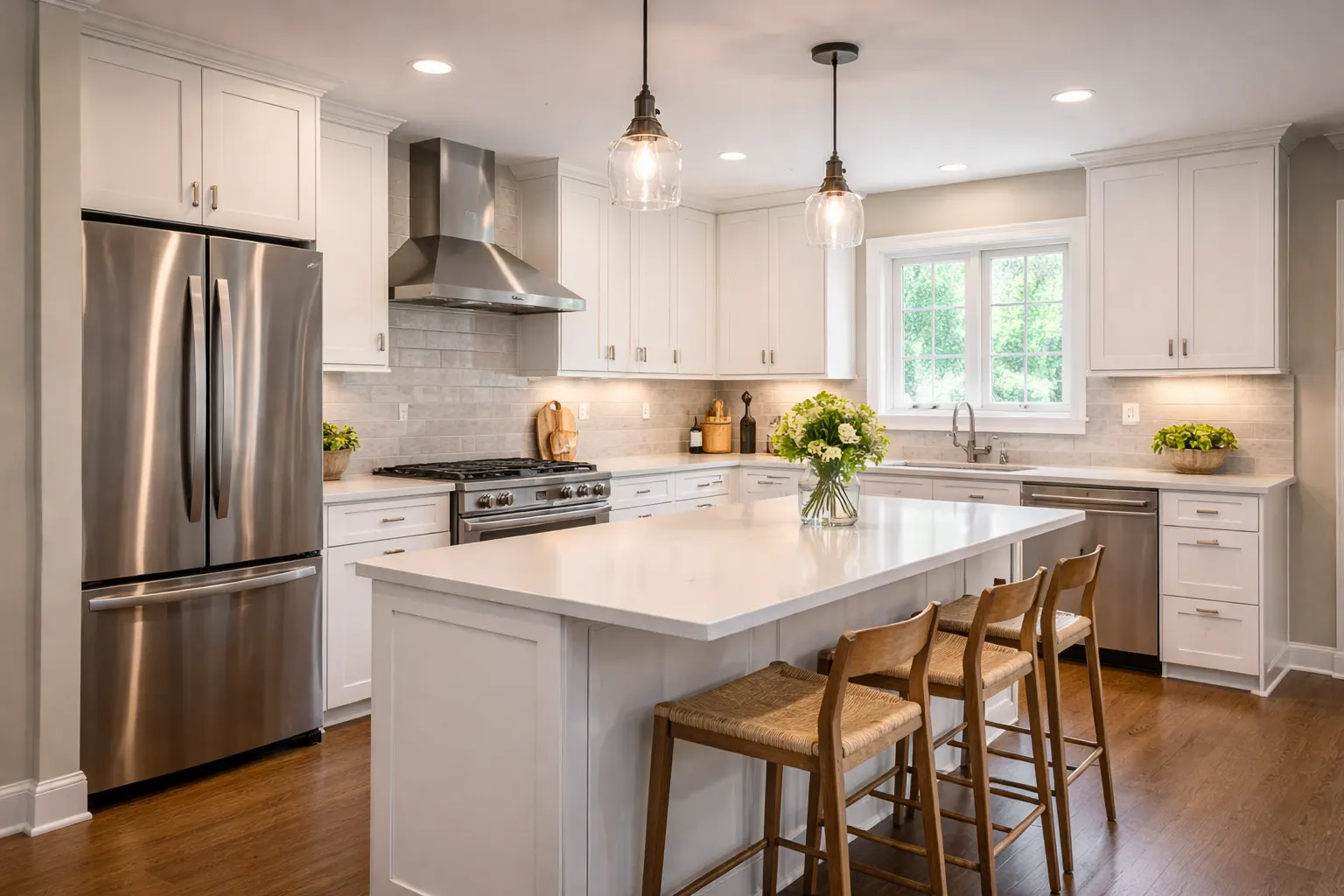
A kitchen does not have to be falling apart to be the wrong kitchen for the way a household lives now. In many homes, the issue is not just age or style. It is function. The room may feel cramped, dim, short on storage, hard to cook in, or unable to support the way the family actually uses it. That is usually the point where homeowners start wondering whether they need a simple refresh or something more substantial.
The answer depends on whether the frustration is mostly cosmetic or truly functional. Cosmetic issues are things like dated finishes, worn paint, or countertops that no longer match your taste. Functional issues affect how the kitchen works every day, such as poor layout, limited prep space, inadequate lighting, or not enough storage. The National Kitchen and Bath Association’s kitchen planning guidance focuses heavily on work zones, clearances, storage, and lighting, which is a good reminder that a successful kitchen is not just attractive. It has to work well.
When the Layout Is Working Against You
One of the clearest signs it may be time to remodel is a layout that makes routine tasks harder than they should be. If the refrigerator door blocks a walkway, two people cannot work comfortably at once, or the sink, range, and prep areas are constantly competing for the same space, the problem is probably bigger than the finish selections.
NKBA’s kitchen planning guidelines recommend minimum aisle widths of 42 inches for one cook and 48 inches for multiple cooks, which reflects a broader point: kitchens need enough room to move safely and comfortably. When a layout is too tight or awkward, a homeowner can spend years trying to compensate with organization tricks that never quite solve the problem.
A partial update can help if the room basically works and only needs better surfaces or improved storage accessories. But if the footprint, appliance relationships, or circulation paths are fundamentally off, a full remodel often makes more sense.
You Never Seem to Have Enough Storage
A kitchen that looks decent can still be frustrating if there is nowhere to put anything. Overflowing counters, crowded pantry shelves, and base cabinets that swallow small items are common signs that the kitchen no longer fits the household.
Sometimes this can be improved without a full rebuild. Better cabinet organizers, pantry upgrades, pull-outs, and more thoughtful cabinet interiors may solve the issue if the cabinetry is still in good condition. But if the problem is that there simply are not enough cabinets, the wall space is poorly used, or the room was never designed for modern storage needs, the better answer may be to redesign the room rather than keep patching it. NKBA’s planning resources emphasize storage planning as a core part of kitchen function, not an afterthought.
Lighting Is Too Weak or Poorly Placed
Many older kitchens have one central ceiling light and very little else. That can leave prep areas dim, shadows across countertops, and the entire room feeling less usable. Good lighting should support work, safety, and comfort, not just appearance.
NKBA’s 2024 guidelines include detailed recommendations for task lighting, including illumination over work zones and at the sink. NKBA’s 2026 kitchen trends release also notes that homeowners place high importance on natural lighting, overall lighting quality, and task lighting for work zones.
This is often a good example of the difference between a partial update and a larger remodel. If the kitchen layout works well, improving lighting may be a targeted project. But if poor lighting is tied to poor room planning, low-function cabinetry, and weak prep areas, it may make sense to address everything together.
Surfaces and Cabinetry Are Worn Out
There is a difference between dated and worn out. A kitchen with older wood cabinets that are still structurally sound may only need refinishing or hardware changes. But peeling thermofoil, swollen cabinet boxes, damaged drawer slides, failing laminate edges, water-damaged sink bases, and heavily worn counters can signal that the room is beyond a cosmetic refresh.
HUD’s homeowner guidance on repair financing stresses understanding full job costs, comparing estimates, and reading contracts carefully before starting work. That is especially important when homeowners are deciding whether to keep repairing an aging kitchen or invest in a more complete solution. Repeated piecemeal fixes can add up without solving the underlying problem.
You Do Not Have Enough Prep Space
Counter space matters more than people realize until they do not have enough of it. Kitchens with small landing areas, broken-up counters, oversized appliances crowding the room, or too little uninterrupted work surface can make everyday cooking more stressful than it needs to be.
This is often where homeowners discover that style is not the real issue. The cabinets might look dated, but the deeper problem is that the room was not designed for the way they cook now. A partial update may help if a small reconfiguration can add meaningful surface area. But if the room lacks enough usable counter space because of the overall layout, that usually points toward a full remodel.
Your Family or Lifestyle Has Changed
A kitchen that once worked fine may not fit a growing family, frequent hosting, remote work, or changing mobility needs. More people in the house usually means more food storage, more seating pressure, more cleanup, and more traffic through the space. A kitchen that felt adequate five years ago can start feeling too small without anything technically being broken.
This is where the question shifts from “Is it outdated?” to “Does it still support daily life?” That is often the better test. If the room cannot support how the household lives now, remodeling may be worth serious consideration even if the finishes are still acceptable.
Entertaining Feels Difficult
Not every household cares about entertaining, but for those who do, the kitchen often becomes the center of it. If guests always end up trapped in a narrow passage, there is nowhere to serve food, or the room cuts off conversation and circulation, the kitchen may be limiting more than just cooking.
That does not automatically mean the space needs to be larger. Sometimes it needs to be organized differently. But if the room is consistently hard to use when more than one or two people are in it, that points to a functional issue rather than a cosmetic one.
Energy Efficiency Is Becoming Part of the Decision
Efficiency alone is not always a reason to remodel, but it can strengthen the case when other issues already exist. ENERGY STAR notes that certified products meet strict energy-efficiency specifications, and it specifically highlights kitchen-related products such as dishwashers, refrigerators, and ventilation fans in energy-efficient homes. Household appliances account for nearly 11 percent of energy use in an average house, according to ENERGY STAR.
If the kitchen still works well, upgrading appliances and lighting may be enough. But if homeowners are already facing layout issues, worn cabinetry, poor lighting, and dated materials, bundling efficiency upgrades into a full remodel often makes more practical sense than replacing one item at a time.
Partial Update or Full Remodel?
A partial update may be enough when the kitchen still functions well and the problems are mostly surface-level. That might include painting cabinetry, replacing countertops, updating lighting, swapping out hardware, or installing new appliances.
A full remodel usually makes more sense when the layout is inefficient, storage is inadequate, prep space is limited, lighting is poorly integrated, or multiple systems are aging at once. It can also make sense when homeowners are already planning to invest in several separate updates that would be better coordinated as one project.
There is also a value discussion. JLC’s 2024 Cost vs. Value Report shows that a minor midrange kitchen remodel nationally had a much stronger recoup rate than a major midrange kitchen remodel, which is a useful reminder that bigger is not always better. In Detroit, the 2024 report showed a major midrange kitchen remodel recoup rate of about 43.5%, reinforcing that homeowners should think first about livability and function, not only resale.
Conclusion
A kitchen remodel is usually most worthwhile when the room is no longer serving the people who use it every day. Outdated colors alone do not always justify a full renovation. But poor layout, limited storage, weak lighting, worn-out materials, too little prep space, and changing family needs often do.
The key is to be honest about the problem. If the frustration is mostly visual, a partial update may go a long way. If the room is no longer functional, a more complete remodel may be the smarter long-term decision. The goal is not just a newer-looking kitchen. It is a kitchen that works better, feels better, and fits daily life more naturally.
Sources
- National Kitchen & Bath Association, Kitchen and Bath Planning Guidelines
- National Kitchen & Bath Association, Planning Guidelines overview
- ENERGY STAR, Energy Efficient Products
- ENERGY STAR, Electric Cooking Products
- U.S. Department of Housing and Urban Development, Home Improvements
- HUD, Fixing Up Your Home and How to Finance It
- JLC, 2024 Cost vs. Value Report
- JLC, 2024 Cost vs. Value Report, Detroit, MI
Stay Informed
Recent News

Start Your Project Today
Tell us about your home and what you want to improve. We will review your project and provide clear next steps.