How to Plan a Home Addition Without Regret
- April 7, 2026
- 1:30 pm
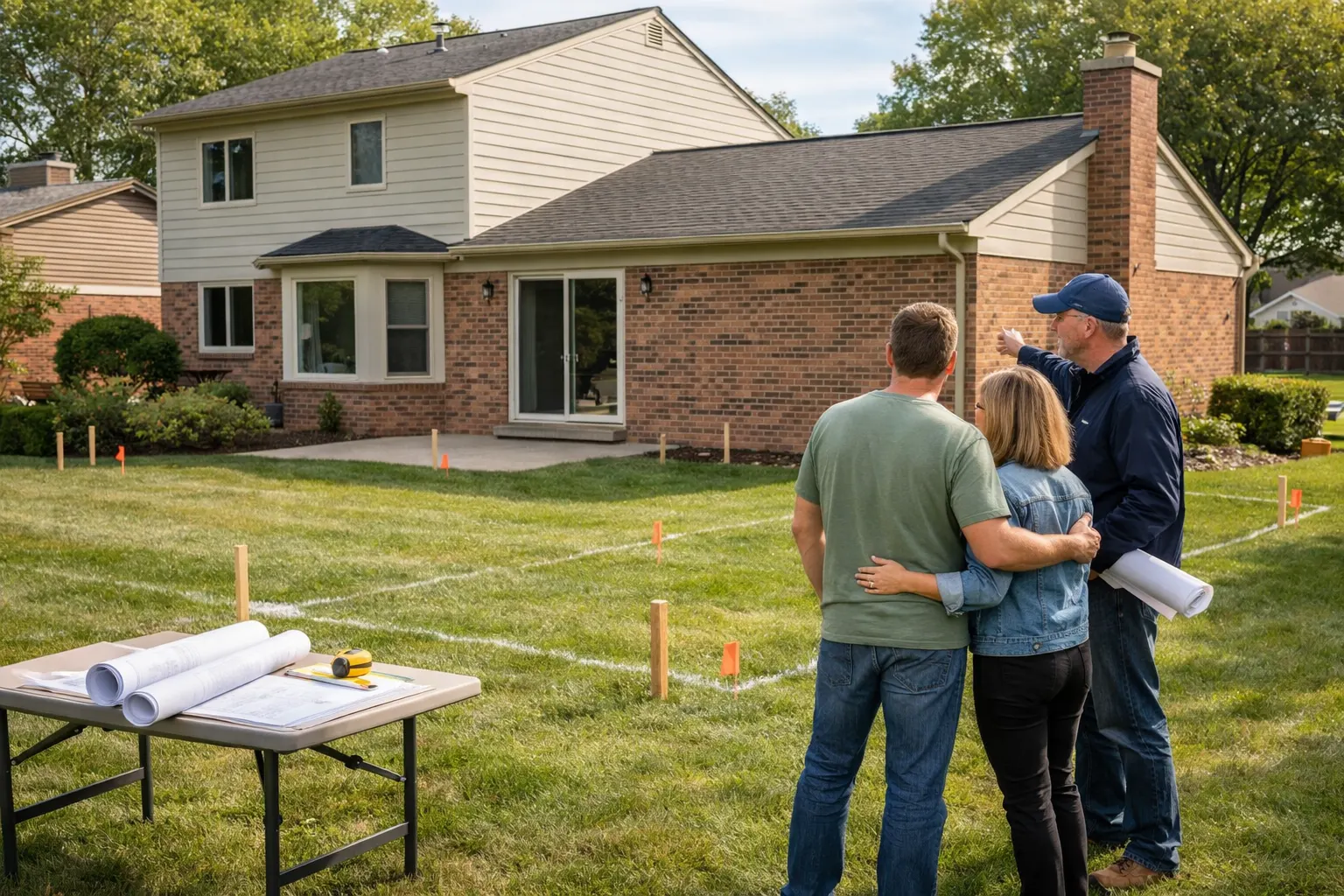
A home addition can solve real problems. It can give a growing family more room, create a better layout, add a first-floor primary suite, or make daily life more comfortable. But the projects homeowners feel best about later are usually the ones that were planned clearly before construction ever starts. The National Association of Home Builders advises homeowners to begin with a prioritized list of needs and wants, budget honestly, and think through how the space will actually be used. That kind of planning is what helps an addition improve function, comfort, and long-term value.
Start With the Real Purpose
Before talking about finishes or square footage, it helps to define what problem the addition is solving. Is the goal to add a bedroom, open up the rear of the home, create a larger kitchen and family area, or make room for multi-generational living? A second-story addition has very different structural and budget implications than a rear bump-out or a one-room expansion, so the purpose should be clear from the start. NAHB recommends putting needs and wants in writing and thinking through traffic flow, furniture placement, lighting, and how the remodeled space will function day to day.
One common mistake is planning around a vague idea like “more space” instead of a specific daily need. Homeowners sometimes build square footage without improving how the house actually works. A better approach is to define success in practical terms: more storage, a larger kitchen footprint, a mudroom that controls clutter, a quieter office, or a main-floor suite that supports aging in place. That makes the design decisions easier later.
Budget for More Than the Build Itself
A realistic budget is not just the construction number. It should also account for design work, permit fees, engineering if needed, temporary protection of finished areas, site work, and finish selections that may change as plans develop. HUD’s consumer guidance also stresses understanding job costs fully, reading contracts carefully, and comparing more than one estimate instead of choosing only by lowest price.
Another planning mistake is assuming every dollar spent on an addition comes back at resale. Remodeling Magazine’s 2024 Cost vs. Value Report shows that addition projects often return only part of their cost. National averages in that report place a midrange primary suite addition at about 36% cost recouped and a midrange bathroom addition at about 35%, which is a good reminder that additions should usually be planned for livability first and resale second.
Make the Addition Look Like It Belongs
A well-planned addition should feel connected to the existing home, not attached to it as an afterthought. That means paying attention to rooflines, window proportions, floor heights, siding or masonry transitions, and how old and new spaces meet inside. Even if materials are updated, the addition should still respect the character of the house. When that step is skipped, homeowners often end up with awkward exterior lines, mismatched ceiling heights, or rooms that feel disconnected from the rest of the home. This is more design discipline than regulation, but it strongly affects whether the project feels successful years later. That practical emphasis on function and design clarity is consistent with NAHB’s planning guidance for remodeling projects.
Zoning and Permit Rules Can Change the Plan
This is one of the most overlooked parts of addition planning. Many homeowners assume that if they own the property, they can build where they want. In reality, local rules may limit what is possible. The City of Livonia’s Home Addition Guide explains that permit review can involve grading, zoning ordinance review, and building plan review. It specifically calls out lot coverage, setbacks, height and size requirements, drainage, sidewalks, utility locations, wetlands, flood plains, and even tree-related permits in some cases.
Michigan also notes that building permit applications must be submitted to the appropriate enforcing agency, which may be the state, county, or local government depending on jurisdiction. In other words, permit requirements are not just paperwork at the end. They can affect where the addition sits, how large it can be, and how early the project can begin.
Respect the Structural Realities
Not every house can accept an addition in the same way. Existing foundations, framing, roof structure, and load paths all matter. Livonia’s guide notes that when an addition is constructed, the existing foundation system needs to be capable of supporting the additional loads, and extra work may be required if it is not. It also notes that additions typically cannot be built on an existing wood deck unless that structure is specifically designed to support the load, usually with added engineering.
This is especially important for second-story additions or large rear expansions where homeowners may imagine a simpler build than what the structure will actually allow. One of the most common early mistakes is assuming the project is mostly cosmetic when the hidden work may involve foundation changes, beams, structural reinforcement, HVAC reconfiguration, electrical upgrades, or drainage corrections. Those issues are not unusual, but they should be discovered in planning, not after demolition.
Expect the Timeline to Be Longer Than the Build Days
Homeowners often think in terms of demolition-to-finish, but the real timeline starts earlier. Local review, design development, revisions, permit approval, material lead times, and inspections all affect the schedule. Livonia’s guide notes that plan reviews are handled in the order received and that review times vary depending on workload. It also says complete plans help expedite the process.
That is why clear drawings and a well-scoped plan matter so much. Delays are often caused by incomplete submissions, unresolved design questions, or late changes after work begins. In practical terms, good planning reduces rework and keeps the process steadier. It does not remove every surprise, but it does lower the chances of avoidable ones.
Plan for the Disruption Inside the House
A home addition is not only a design and permit exercise. It is also a lived experience. Depending on the project, there may be noise, dust, restricted access, temporary wall openings, interruptions to HVAC or electrical service, and parts of the house that are unusable for periods of time. Exterior work can also affect the yard, driveway access, and material staging. Livonia’s guide even notes site rules like erosion control, keeping the street clean, and containing materials and debris on the property.
It helps to decide early how the household will function during the project. Will the kitchen remain usable? Will children or pets need to be kept out of work zones? Will a bathroom be offline for part of the schedule? These are not small details. They shape whether the process feels manageable or overwhelming.
Think About Long-Term Function, Not Just Today’s Wishlist
The best additions usually solve today’s problem while still making sense years from now. That might mean adding storage instead of only square footage, designing a flexible room that can change purpose later, or making choices that improve comfort and efficiency. ENERGY STAR notes that sealing air leaks and adding insulation are among the most cost-effective ways to improve comfort and energy efficiency, and that these upgrades can reduce energy use and improve how a home feels in daily life. For additions, this matters because new space should not feel drafty, hard to heat, or disconnected from the rest of the home.
A thoughtful addition can absolutely improve long-term value, but usually because it makes the house work better. That is different from simply making it bigger. The more closely the design matches the home, supports daily routines, and respects code, structure, and budget, the less likely it is to become a regret project later.
Conclusion
Planning a home addition well means asking better questions before construction begins. What is this space meant to fix? What is the realistic budget? Does the design fit the house? What will zoning, permits, and structure allow? How will the work affect daily life while it is underway?
When homeowners slow down and answer those questions early, the project usually goes better. Good planning does not make an addition simple, but it does make it smarter. And in the long run, that is what helps new space feel worth it.
FAQ
How early should I start planning a home addition?
Earlier than most homeowners expect. Design, review, permit approvals, and scheduling all happen before construction begins, and local review times can vary.
Will a home addition always increase resale value?
It can help market appeal and functionality, but additions do not always return their full cost at resale. Remodeling Magazine’s Cost vs. Value data is a useful reminder to plan for function first.
Do I need a permit for a room addition or rear expansion?
In most cases, yes. Permit and review requirements are handled by the appropriate enforcing agency and often include zoning, structural, and site-related review.
What is the biggest planning mistake homeowners make?
Starting with a loose idea instead of a defined purpose, realistic budget, and complete plans. That tends to create change orders, delays, and design compromises later.
Sources
- U.S. Department of Housing and Urban Development, Home Improvements
https://www.hud.gov/helping-americans/home-improvements - National Association of Home Builders, Thinking About Home Remodeling? Start Here
https://www.nahb.org/other/consumer-resources/thinking-about-home-remodeling-start-here - City of Livonia, Home Addition Guide
https://livonia.gov/DocumentCenter/View/3225/Home-Addition-Guide-PDF - Michigan Department of Licensing and Regulatory Affairs, Building Permit Information
https://www.michigan.gov/lara/bureau-list/bcc/sections/permit-section/permits/building-permit-information - JLC / Remodeling, 2024 Cost vs. Value Report
https://www.jlconline.com/cost-vs-value/2024/ - ENERGY STAR, Seal and Insulate
https://www.energystar.gov/saveathome/seal_insulate
Stay Informed
Recent News
Start Your Project Today
Tell us about your home and what you want to improve. We will review your project and provide clear next steps.